
Why Tech Parks Matter: The Role of Infrastructure in Innovation
In Bengaluru, demand for tech-based enterprises keeps rising. The Indian office market recorded peak absorption in 2024, led by technology corporations and flex-space providers. Today, the city boasts one of the global top 12 technology talent hubs with more than one million technology employees.
For developers such as the Jayalakshmi Group, such demand represents a clear mandate.
The focus is now on building tech parks that offer robust infrastructure, ecosystem, and future-ready campuses in the correct micro-markets. This is especially important as today, technology parks are no longer merely an agglomeration of glass towers. They are the backbone that enables digital innovation and GCC expansions around the globe.
How tech parks have evolved into innovation engines
Modern tech parks have emerged as engines of innovation rather than simple office spaces. Studies on science and technology parks show that companies located within these environments tend to achieve stronger research efficiency and greater knowledge accumulation than those outside.
Global agencies further note that innovation parks contribute significantly to productivity, technology adoption, and the overall performance of local economies.
In other words, a good tech park in Bangalore can:
- Facilitate innovation in companies through proximity to talent and customers.
- Minimise delays in operations because of integrated services and infrastructures.
- Support long-term growth with scalable enterprise-ready office buildings in key corridors of Bengaluru.
For the occupiers, the issue has moved from “Which city?” to “Which Tech parks on which campus?”
What makes a tech park “innovation ready”?
Not every cluster of buildings qualifies as a high-performance environment. Innovation needs specific infrastructure blocks working together.
|
Infrastructure pillar |
Direct impact on innovation |
|
Connectivity |
Cuts commute stress, improves talent access, and meetings |
|
Better utilities |
Avoids downtime for workload and operations |
|
Digital and security backbone |
Enables AI, cloud, R&D, and data-compliant operations |
|
Flexible, large floorplates |
Supports agile teams, labs, studios, and scaling GCCs |
|
Social amenities |
Encourages conversations and healthy teams |
|
Green, health-focused design |
Improves comfort, ESG scores, and long-term operating costs |
A well-planned Bangalore tech park usually combines these pillars in one campus. This integrated design supports a stronger business ecosystem when compared to single, standalone buildings.
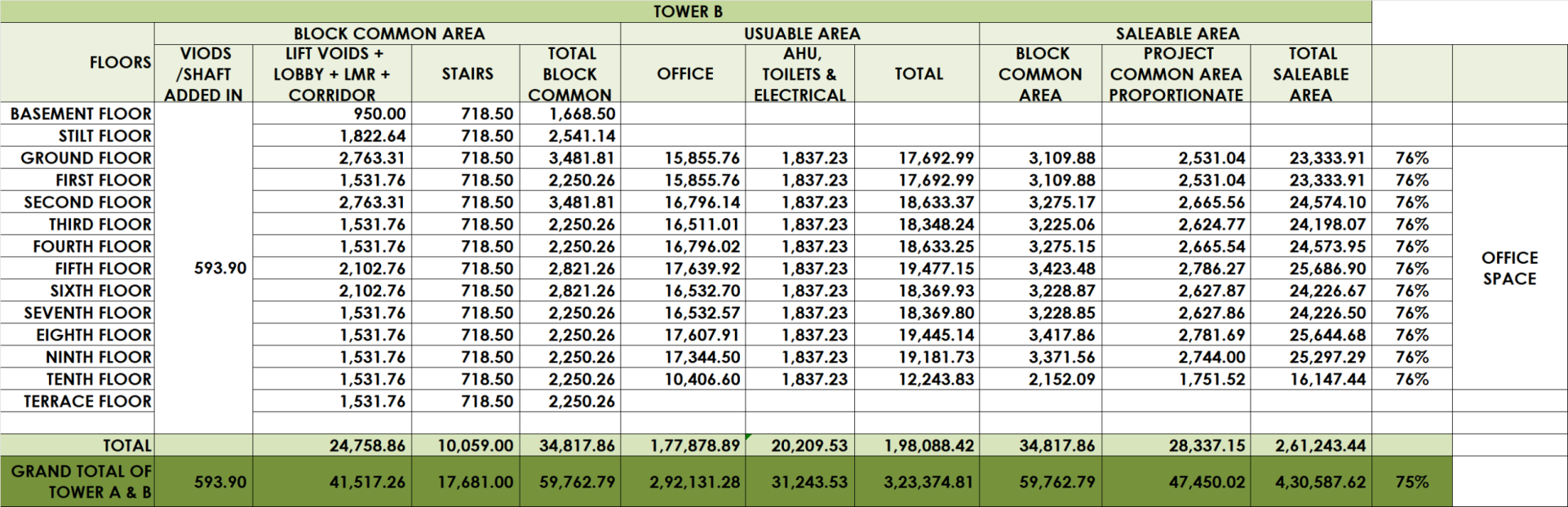
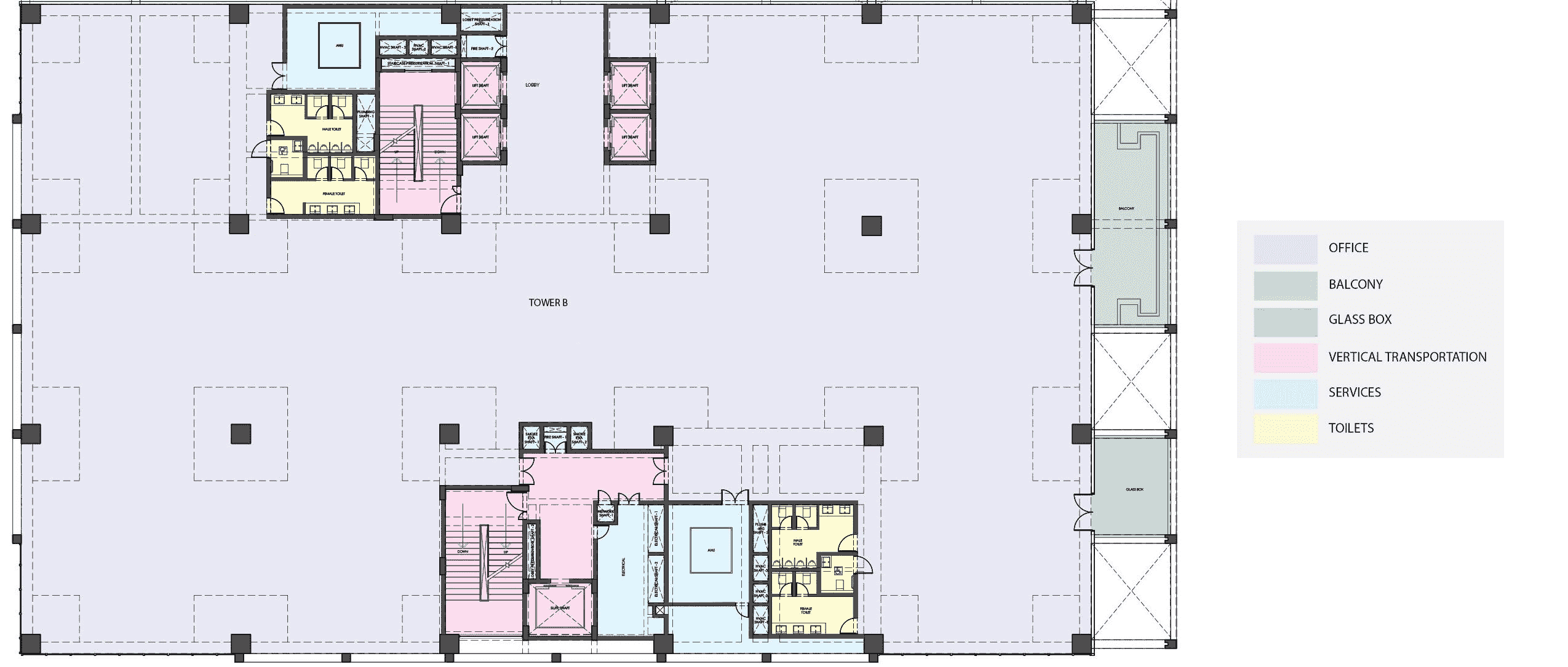
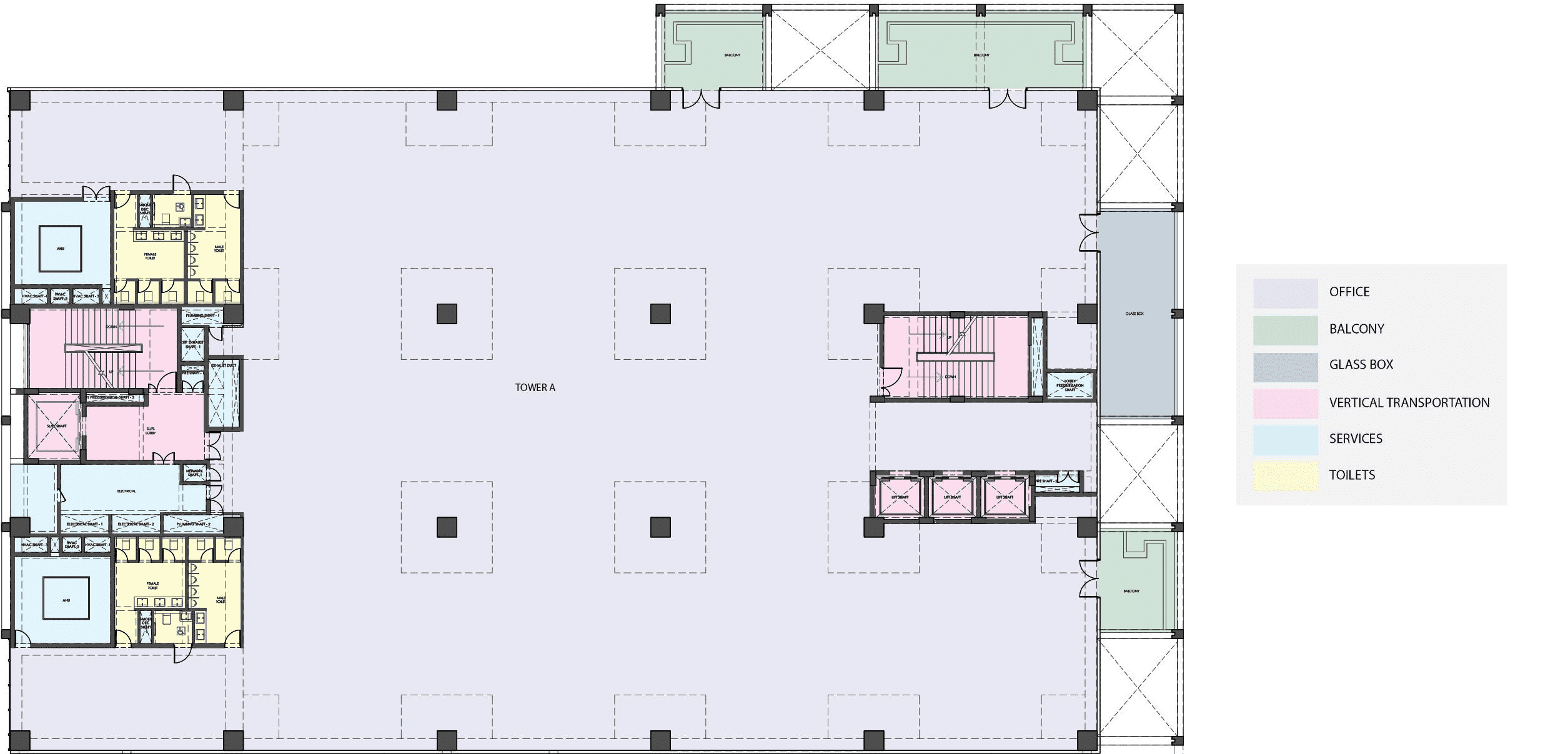
For example, Jayalakshmi Group’s upcoming Jayalakshmi Tech Park near Bengaluru airport is planned as a premium Grade A facility. It offers about 4.45 lakh sq. ft. across two LEED-certified towers with daycare, gym, convention space, café, restaurants, and tree-lined private balconies.
Such infrastructure directly supports innovation-heavy tenants like IT, aerospace, R&D labs, and data centres.
How Infrastructure Shapes the Business Ecosystem Today
A strong business ecosystem emerges when the right talent and policies are placed in the right infrastructure. Tech parks sit exactly at this intersection.
-
Faster collaboration and knowledge flow
When multiple enterprises share one campus, collaboration friction drops. Studies on industrial and technology clusters show that proximity increases cooperation, co-development, and spill-over innovation.
In a dense Bangalore tech park, you often see:
- Product companies sharing corridors with partners in the same industry.
- GCCs working near analytics, design, and consulting firms.
- Coworking and enterprise hybrid solutions in Bangalore North that are ideal for both small companies and global captives on the same floor.
This mix strengthens the overall business ecosystem and turns everyday interactions into opportunities for real progress.
-
Talent magnet and retention lever
Global companies continue to expand their India GCCs. In H1 2025, tech organisations made up nearly 50% of all office leasing in major Indian cities, with Bengaluru and Hyderabad together capturing half of the tech sector’s demand.
Top candidates now benchmark their workplace against leading Tech parks. They look for:
- Smart tech-enabled office space Bangalore companies can use from Day 1.
- Transit access, last-mile connectivity, and reasonable commute times.
- Healthier, sustainable green office buildings in Bangalore that suit ESG and wellness priorities.
An integrated campus makes it easier to attract this talent and keep it.
-
Scalability for fast-growing enterprises
GCCs and tech companies prefer large floorplate office space in Bangalore North and other growth corridors. They want to start with a few hundred seats and scale to thousands without shifting micro-markets.
Tech parks that usually offer:
- Enterprise office campus for rent in Bangalore with multiple department-wise towers.
- Premium plug-and-play office space near Bangalore airport.
- Expansion ideas in the same business park office space in Bangalore.
These features give occupiers a clear continuity advantage over fragmented standalone assets.
The Bangalore tech park story
Bengaluru’s office market leads the country on many metrics. The city has delivered record net absorption and accounts for a major share of India’s office demand.
Within the city, the north Bangalore tech park belt has become especially strategic. Manyata Tech Park, for example, is one of the largest campuses in the region. Recent data shows it spans around 120–126 acres and offers more than 16 million sq. ft. of office space, hosting over 60 multinational companies. Its success proves how large, integrated Tech parks can support a deep business ecosystem.
But demand is now outgrowing legacy campuses. Enterprise occupiers are actively looking for:
- An office space in Manyata Tech Park alternative that has a similar scale and better congestion management.
- North Bangalore tech park office space that sits closer to the Airport Road and future metro links.
- Commercial real estate in Bangalore North that offers better ESG compliance and next-generation infrastructure.
This is the context in which new projects like Jayalakshmi Tech Park in the Aerospace Park micro-market are coming up. They offer commercial space near Airport Road Bangalore, for companies that want to be closer to the airport, upcoming tech clusters, and logistics corridors.
What occupiers now expect from next-generation tech parks
The expectations from technology parks have dramatically shifted in the last five years. Hybrid working, AI-intensive workloads, and ESG regulations have raised the bar.
Key requirements we see from enterprise occupiers are:
- Enterprise-level design and compliance
- Enterprise-grade office buildings in Bangalore are developed to cater to data security and GDPR compliance requirements.
- Multiple redundancies in power, cooling, and connectivity to support high-density tech operations.
- Flexible, hybrid-ready layouts
- Coworking & enterprise hybrid solutions in Bangalore North for global and localised teams.
- Easy shell and plug-and-play options that reduce fit-out times and capital expenditures.
- Intelligent, technology-driven operations
- Intelligent technology-enabled office space in Bangalore that can be controlled through apps and building technology platforms.
- Energy consumption, access, desk management, and handling visitors through automated sensors.
- Strong ESG and well-being layer
- LEED-certified, sustainable green office buildings in Bangalore with measurable energy savings.
- Landscaping and natural light for employees.
- On-campus daycare, fitness, and F&B to ease daily life with fewer commute hops.
- Airport and highway connectivity
- Premium plug-and-play office space near Bangalore airport for teams that travel frequently.
- Direct connectivity to Outer Ring Road and national highways, especially in terms of logistics.
Newer campuses around the Aerospace Park micro-market combine many of these features. They act as long-term enterprise office campus options, not short-term speculative builds.
How to evaluate a tech park for your next move
When you shortlist Tech parks for expansion or consolidation, a simple checklist helps.
Step 1: Start with the location
- Is the Bangalore tech park well-connected to the airport, metro, and main arterial roads?
- Does the wider business ecosystem include GCCs, R&D centres, and essential support services?
- Are there residential areas within 30 to 45 minutes for key employee groups?
Step 2: See if the project can be scaled
- Can your company grow to two or three times its size within the same campus over the next five to ten years?
- Does the park feature large floorplate office space in Bangalore North or other prime corridors?
- Is there access to warm shell, managed, and plug-and-play formats?
Step 3: Check for infrastructure
- Power: Two supply sources, strong backup, and capacity for heavy compute or lab loads.
- Network: Carrier-neutral options with robust fibre routes.
- Building systems: Intelligent controls, restricted access, and tracked energy usage.
Step 4: Measuring sustainability
- Is the campus LEED or equivalent certified?
- How many trees, open spaces, and breakout rooms does it offer in actuality?
- Are there any policies concerning water reuse, waste management, and low-carbon operations?
Final Take
Tech parks are at the core of India’s innovation. This is because they provide the infrastructure that supports GCCs, AI teams, R&D labs, and global product companies.
The next wave of growth in Bengaluru is shifting towards integrated, sustainable, and airport-connected campuses. These projects go beyond basic offices and build a strong business ecosystem for tenants.
For occupiers, choosing the right Bangalore tech park is now a strategic innovation decision, not only a real estate choice. Developers like Jayalakshmi Group, with proven experience in office campuses and an upcoming LEED-certified tech park near the airport, are positioned to support that journey.
If your team is exploring new Tech parks for expansion, evaluate infrastructure first. The right campus can accelerate your innovation outcomes for the next decade.